
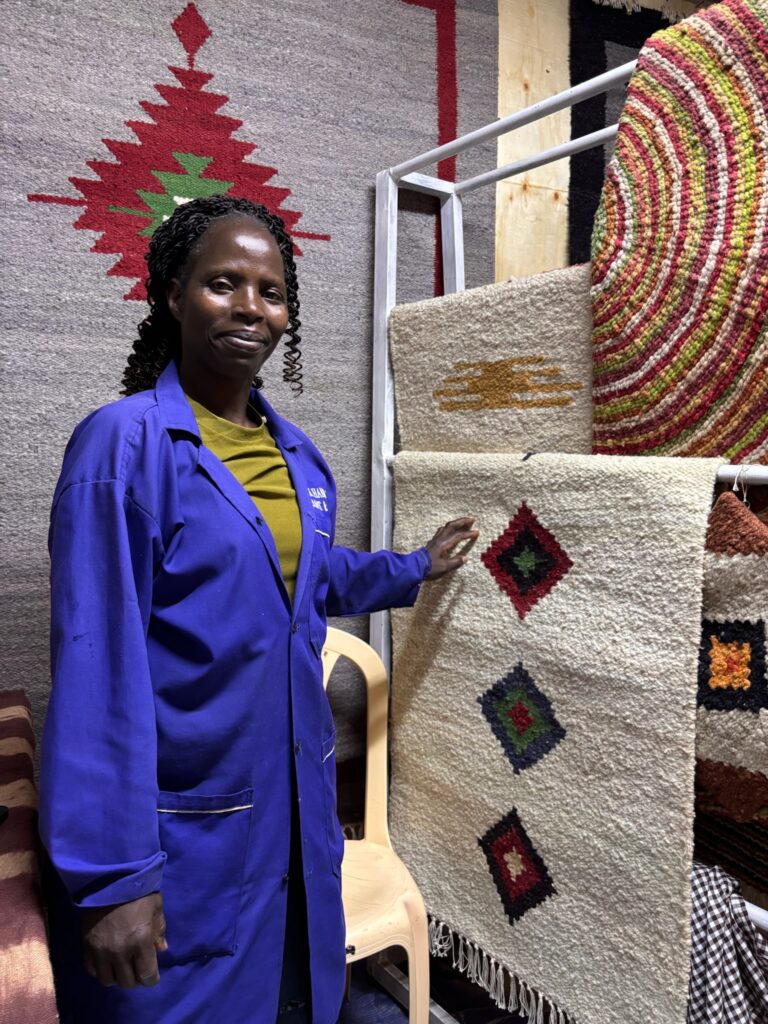
Nairobi’s Ngong Race Course neighbourhood is well known for its wooden furniture vendors. But nestled away from the highway, a short detour from the bustling furniture marts, Rhoda Apiyo is slowly weaving her way into Kenyan homes, one stunning handmade carpet after another, through her business, Jireh Hand Woven Crafts.
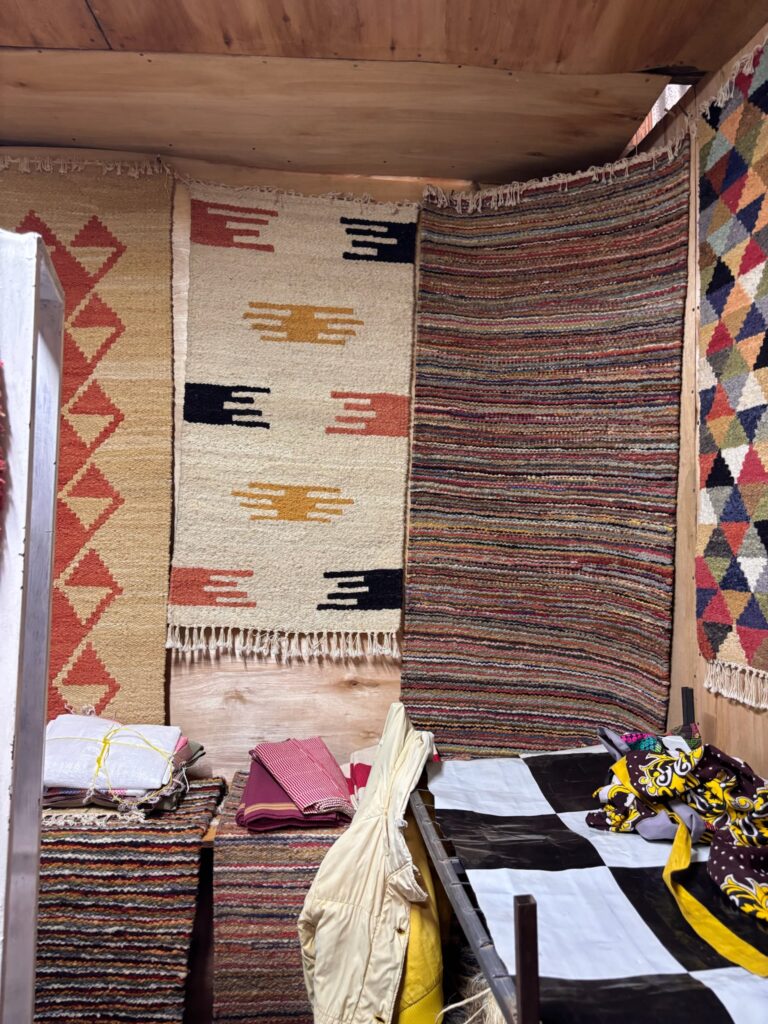
We visit Jireh Hand Woven Crafts on a Friday afternoon in February, and it is a hive of activity. Weavers are hard at work, sat before giant looms, manipulating yarn into intricate designs. Each one is unique, boasting everything from abstract geometrical shapes to animals and plants in multiple colours. Completed carpets are displayed along the walls, waiting for delivery or pick up.
Overseeing all this is Rhoda Apiyo, the 50 year old matriarch who started the business 7 years ago with nothing more than a dream, unmatched skill, and Kes 30,000.
Humble Beginnings
“I started off as a carpet weaver in 2001, earning Kes 60 per square foot. I worked for other people until 2019 when business slowed down and orders diminished. I finally decided to open my own workshop,” said the mother of four.
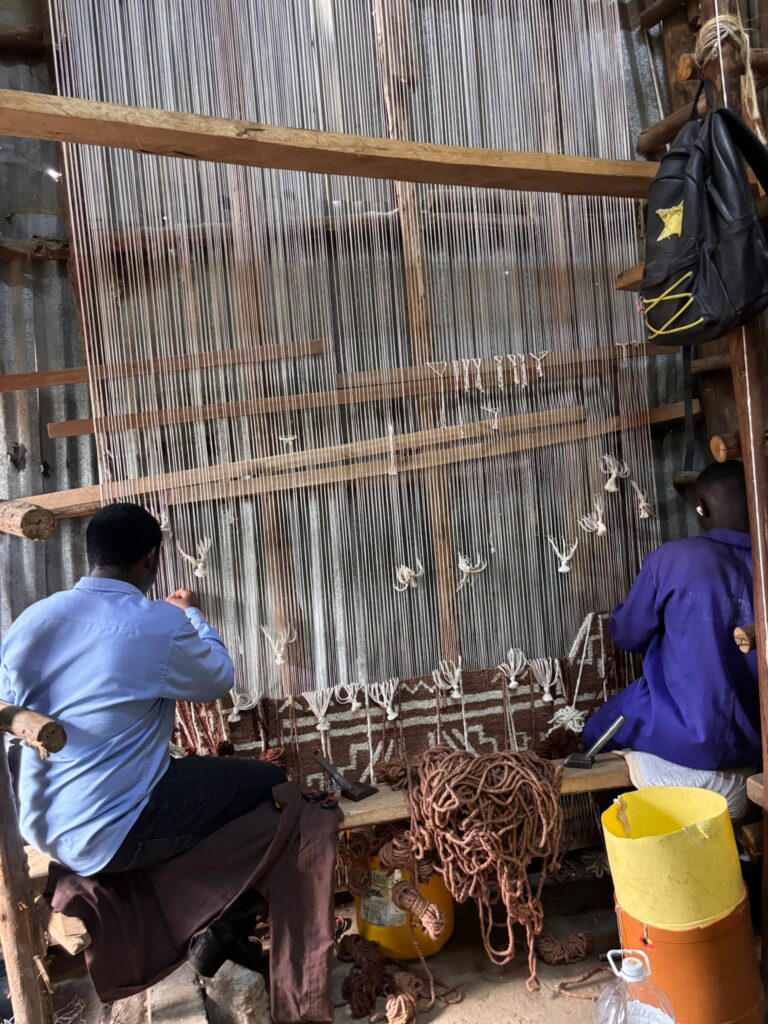
She opened the doors to JHWC, as it is popularly known, in August 2019, and sold nothing for three months. She could barely meet her rent. It wasn’t until November that year that she sold her first carpet. She had priced it at Kes 4800 but could only get Kes 2600 for it.
“I sold it at a loss but I was so grateful for that customer because no one had even made enquiries about my products for three months. I’d make rent by taking random casual jobs including washing people’s laundry,” she said.
From those humble beginnings JHWC has become a household name in Nairobi’s housing decor market. Rhoda fulfils orders from a wide array of customers, including hotels, offices, and individuals looking for something special for their spaces. She has even sold internationally, with her carpets crossing borders to find their way into Europe and the United States.
Know your customer and keep your word
“The people who buy from us know the quality of our work. They know that they will get exactly what they ordered, in the colours that they prefer. We can design anything,” she said. Most of the customers come through referrals, and some find her through the business’s social media channels, which her son runs.
Rhoda takes personal pride in her creativity and attention to details. She is also personable and good at talking to her customers, which comes in handy when things inevitably go wrong with orders.
“Making something by hand means that there is always a margin of error. However, I am very good at negotiating with my customers and making amends where needed. That way, they are always able to get what they want,” she says.
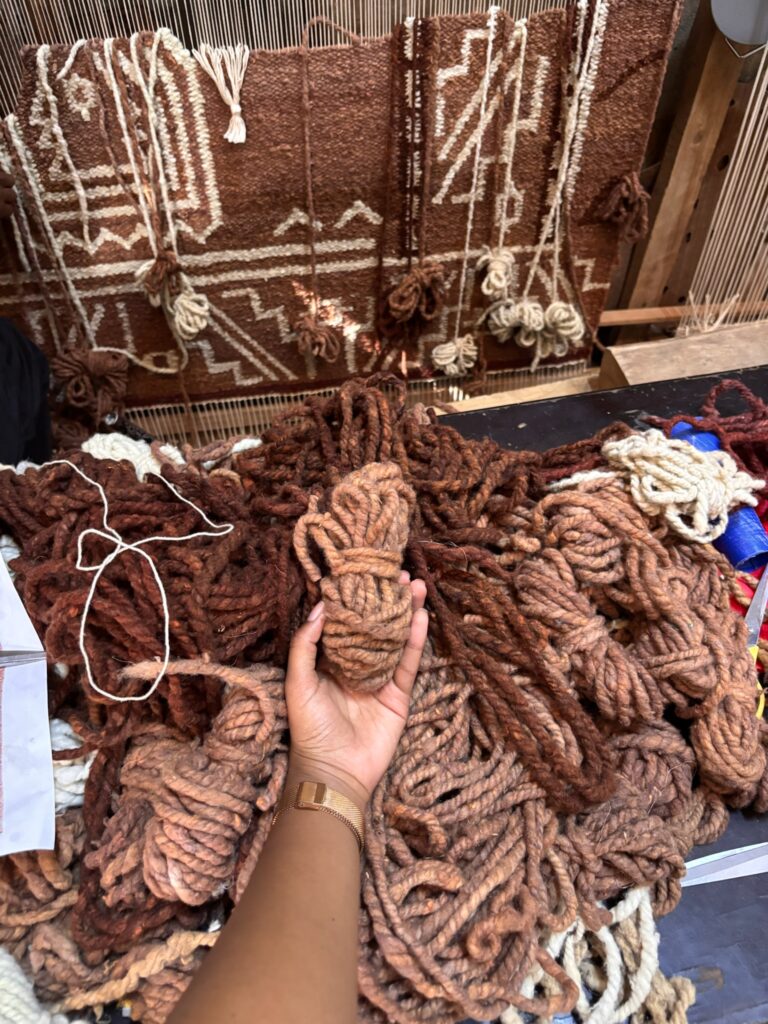
How JHWC transforms wool into carpets
- Wool is shorn from sheep and spun into yarn.
- JHWC buys yarn from the spinners. It usually arrives very dirty and smelling like sheep.
- The yarn is washed repeatedly in warm water and regular bar soap until it gets clean.
- It is then hang out to dry. Dry completely if you’re making a white carpet, and leave it a little damp if you want to make colours.
- After the yarn dries, they dye it. They use synthetic dyes from Germany since sourcing natural dyes from plants and trees is difficult. If you don’t wash your yarn properly in the previous steps, it will end up absorbing a lot of dye, which makes the process expensive.
- The dyed yarn is washed again until the colour stops running.
- It is then treat with a pesticide to eliminate any lingering sheep smell and prevent the yarn from attracting moths.
- Now it’s ready to be woven into carpets.
JHWC sells a range of sizes and style of carpets. Currently, a 2.5ft by 4ft carpet goes for Kes 8500, while the cost of producing it is around Kes 5500. The biggest expense is the yarn, which currently costs Kes 650 per kilogram, up from Kes 300 a few years ago.
The cost of your carpets is affected by the cost of yarn, labour, dye and water
“A big challenge in this business is that the cost of yarn goes up during the cold season, because sheep cannot be shorn when it’s cold as they need the insulation,” said Rhoda.
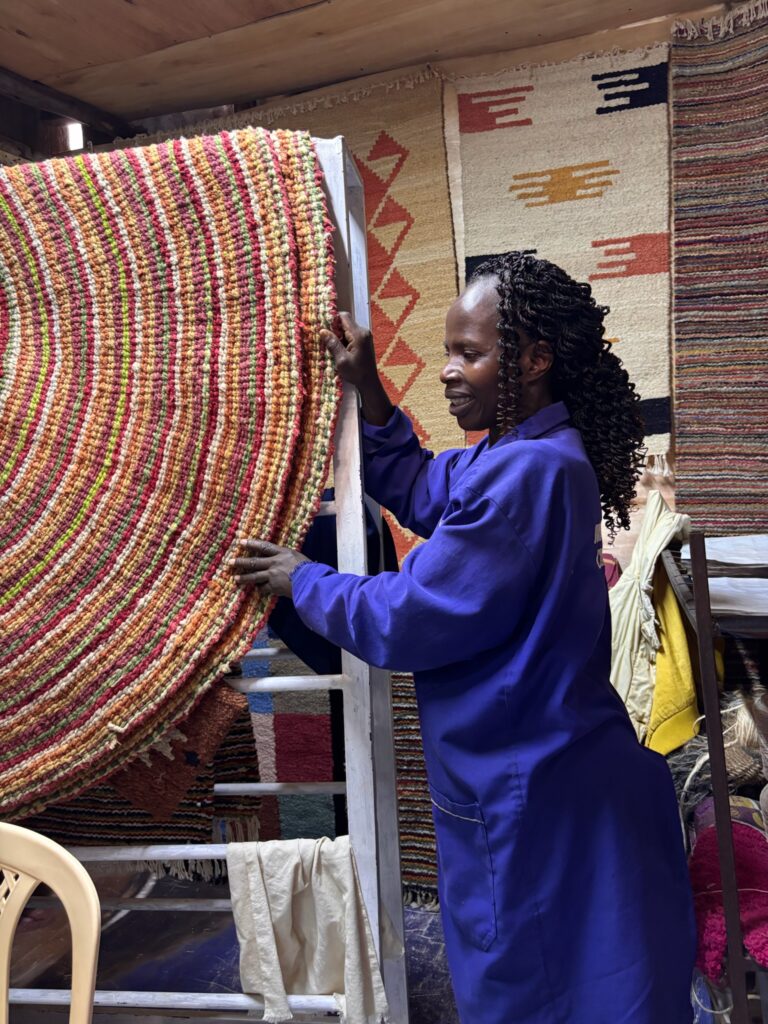
Another challenge has been the availability of skilled labour required for every aspect of the work, but Rhoda has turned this into an employment opportunity for young people in the neighbourhood. She currently has a staff of 12, most of them working on a part time basis to raise money for college.
“I love working with young people, teaching them, and mentoring them. They pick things up very quickly and are easy to train. Some of my employees are students in universities and they work for me during holidays to raise school fees and pocket money. Young people need opportunities, not hand outs,” she said.
JHWC is doing well and Rhoda has no plans to slow down. She dreams of buying land and building a permanent workshop in Nairobi where she can expand her business and train more people.
“This is good work. I taught all my children how to weave carpets and I know that it is a skill they can fall back on and make money from, should their chosen careers not work out,” she said.
Rhoda’s top tips for buying handwoven wool carpets
- If you’re buying a carpet with colours, make sure that the colours are fast and will not bleed. This is something that the seller should be able to guarantee, without excuses.
- Make sure the designs on your carpets are symmetrical across the rug. Ask to see previous products to ensure that the seller can execute designs properly.
- The carpet should not smell of wet wool. Make sure it is completely dry before you take it home.
- Do not wash your carpet with detergent, just use bar soap.