
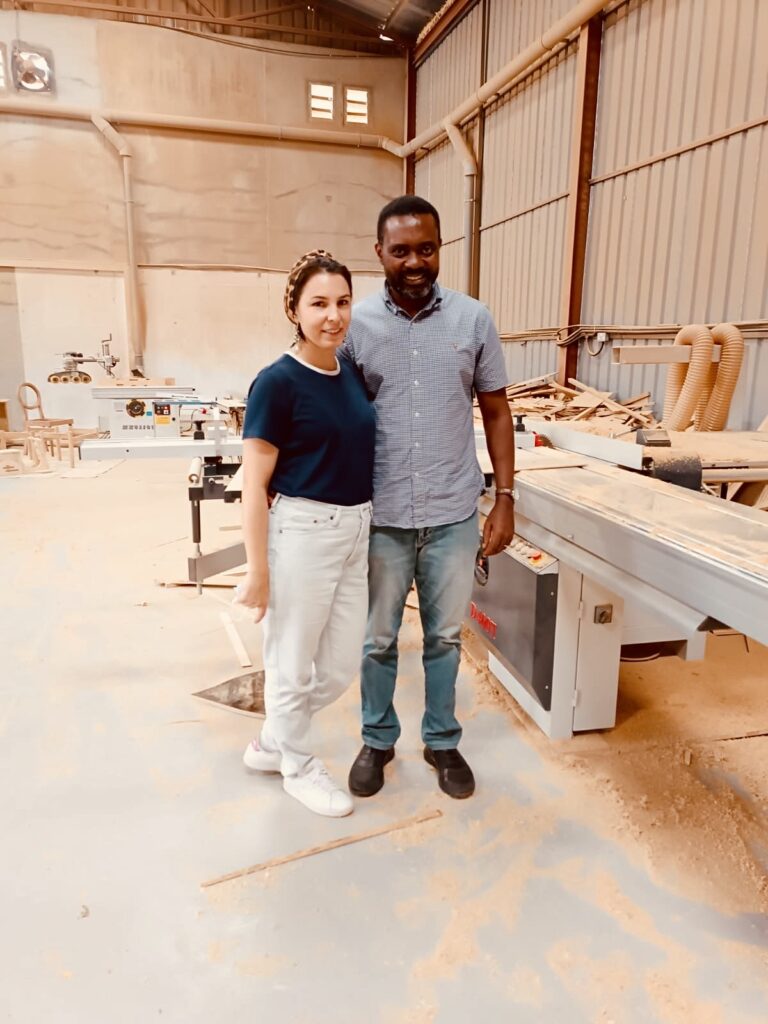
In 2012, Elena Danilova and Koome Muketha were living in Narok and looking for a baby cot for their first child. They found a mahogany one, but the construction quality was poor and they knew that it wouldn’t serve them for long. This sparked an idea. “What if we started a furniture business selling well-made, high quality pieces?” 12 years later, Lion and Bear Furniture was born.
Before Lion and Bear became a furniture manufacturing business, Elena and Koome at first imagined that they would resell imported ready-made furniture either from abroad or source it locally. But this idea quickly lost its appeal when they realised that it would give them very little control over the kind and quality of furniture available. So they decided to make their own.
“Our biggest gripe was that nobody in the market was making the kind of furniture that we liked, and at scale. We decided to fill that gap,” said Elena.
This was a daunting task for the couple- Elena is an art teacher and Koome a doctor- with no formal training in woodworking or furniture making. However, with a keen eye for quality and an artistic flair for design they knew that with the right team of carpenters and upholsterers, the dream could be brought to life.
You probably will not win on your first try, but you’ll learn a lot
They opened the doors to Lion and Bear Furniture in April 2025 following months of research and countless meetings with interior designers, suppliers, furniture sellers, and craftsmen. They had purchased the requisite machines, hired a team of three (a carpenter, an assistant, and a workshop manager,) and rented a workshop space. All they needed was for orders to start coming in.
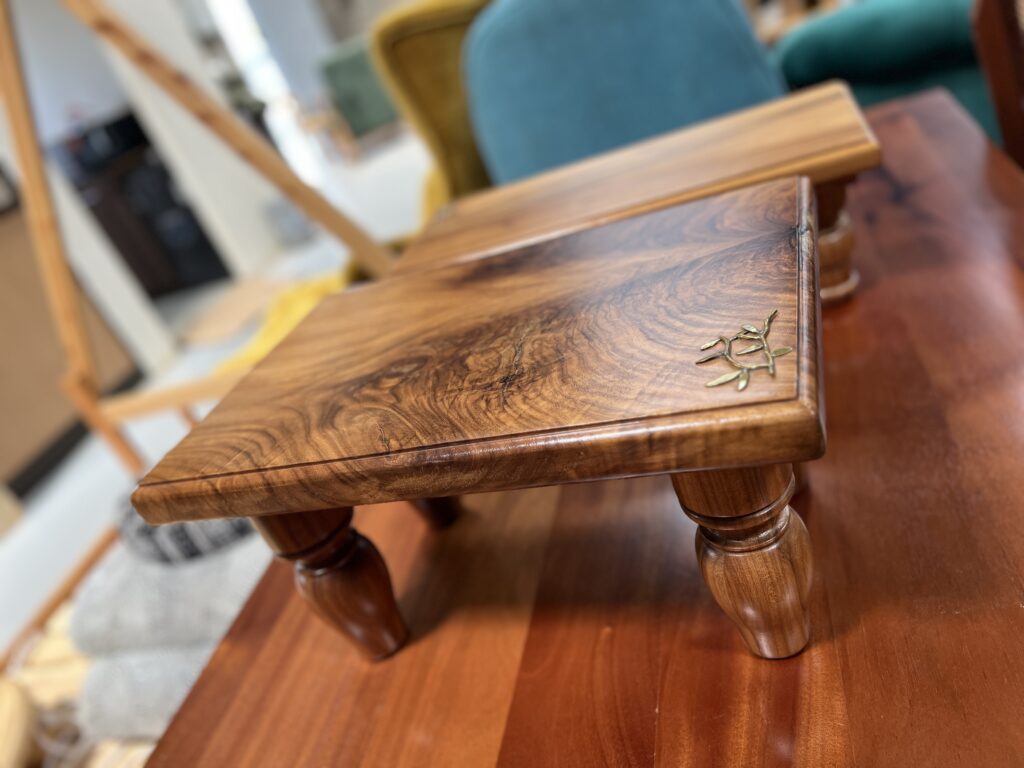
“Our first client was someone we knew. They wanted a dining set and a TV stand. We made a loss on that first order,” recalls Elena with a laugh.
This deceptively simple order proved to be a challenge for the young business. They discovered an issue with the timber used for the project and the pieces had to be remade. It was an important lesson about how wood quality can make or break a furniture business.
“We realised that most vendors lie about how dry their wood is, selling it to you when it still has high moisture content. This means that when you use this timber to make furniture, the furniture bends or cracks open in places. That’s why a lot of people have dining tables or cabinets that need repair after a while because they warp or wobble,” they said.
Good wood is worth the trouble
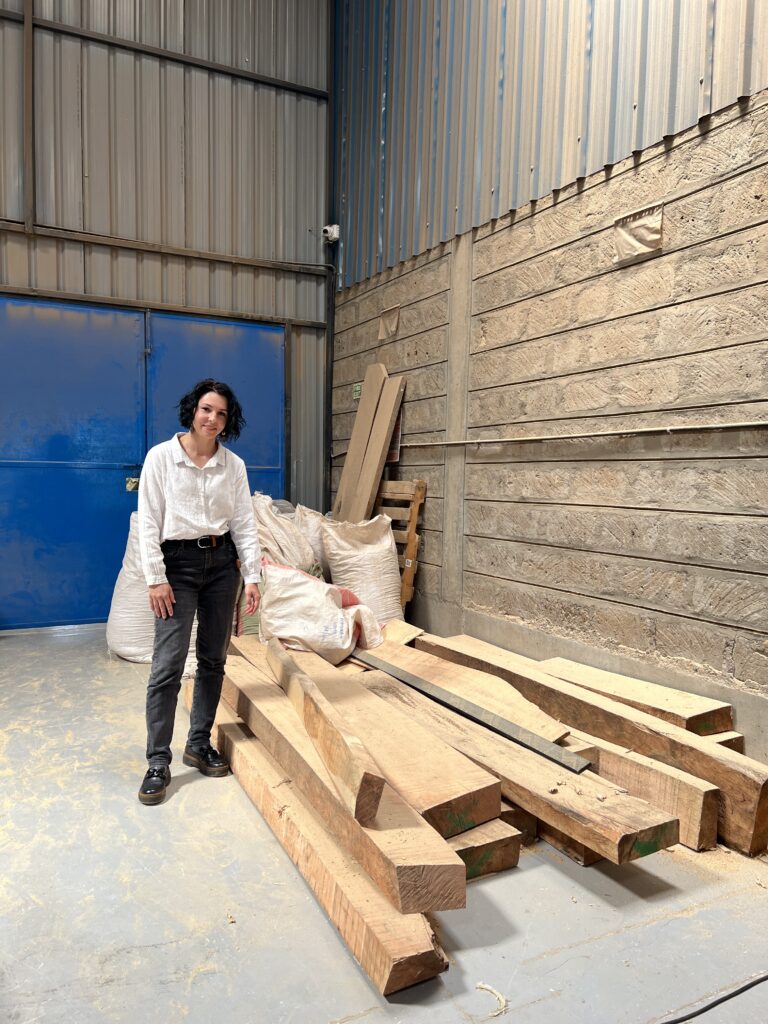
Lion and Bear Furniture now prides itself on only using kiln dried wood, and guarantees its customers that their furniture will serve them and remain undamaged for years, barring regular wear and tear.
So what’s their process for sourcing and treating wood?
- We buy raw wood in bulk, cut into beams.
- We then cut the beams further into the required thickness.
- We take it to the kiln to dry for up to 6 weeks, ensuring it reaches the correct moisture level.
- We bring the wood to the workshop and let it rest so it can adjust to the moisture in the environment, to make it stable.
- It is then ready to be used.
A year later, the business now occupies an expansive space at Horizon Business Park in Ruiru, boasting bigger machinery and a growing workforce. Elena has since quit her teaching job to run the business full time. She has found her stride in conceptualising and designing the furniture, and working closely with carpenters to bring it to life. Koome, on the other hand, handles the finance and operations end of things.
A nod to a rich double heritage
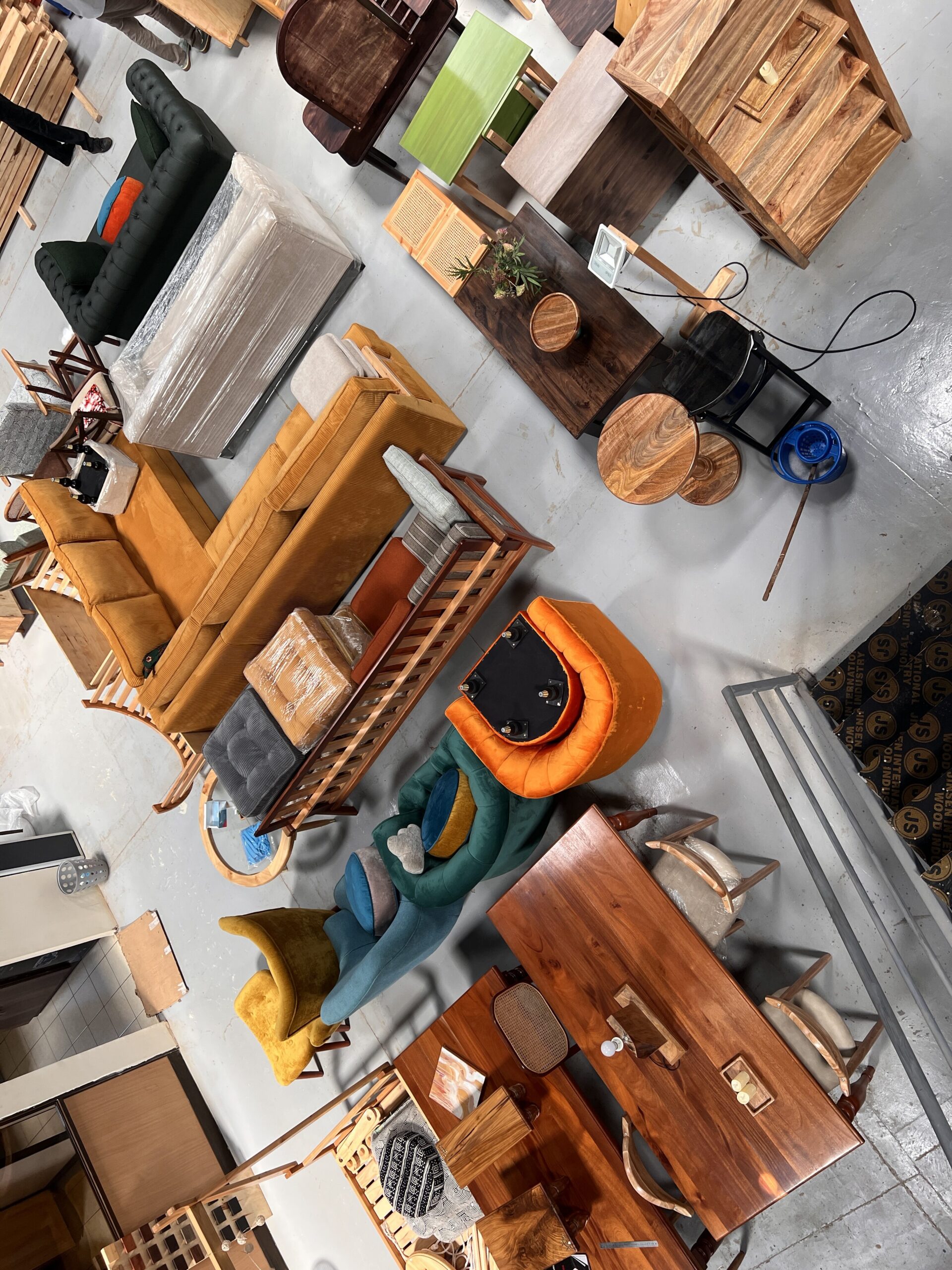
Their furniture is distinct in its simplicity and non-fussiness, recalling a mid-century modern design coupled with Scandinavian and classic styles. This, Elena says, is influenced by their lifestyle and upbringing. She was born and raised in Russia, and her husband grew up in Kenya. The name of the business, Lion and Bear, is also a nod to this double heritage; bears are to Russia what lions are to Kenya.
“I like clean lines and a minimalistic look. We avoid sharp corners, opting instead for gentle curves, because we value comfort and safety,” said Elena.
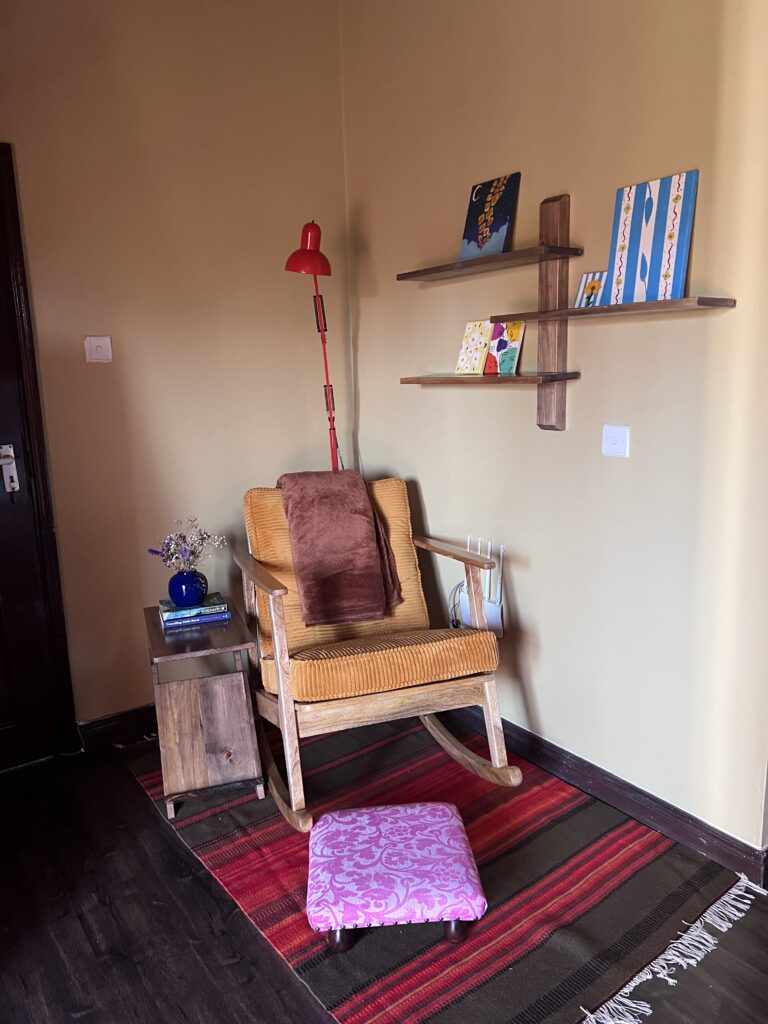
Their bestseller is an armchair called the Lana chair, named after their firstborn. The chair currently retails for Kes 24,000. Lion and Bear also sells made-to-order items including beds, tables, tv consoles, rocking chairs, and children’s furniture.
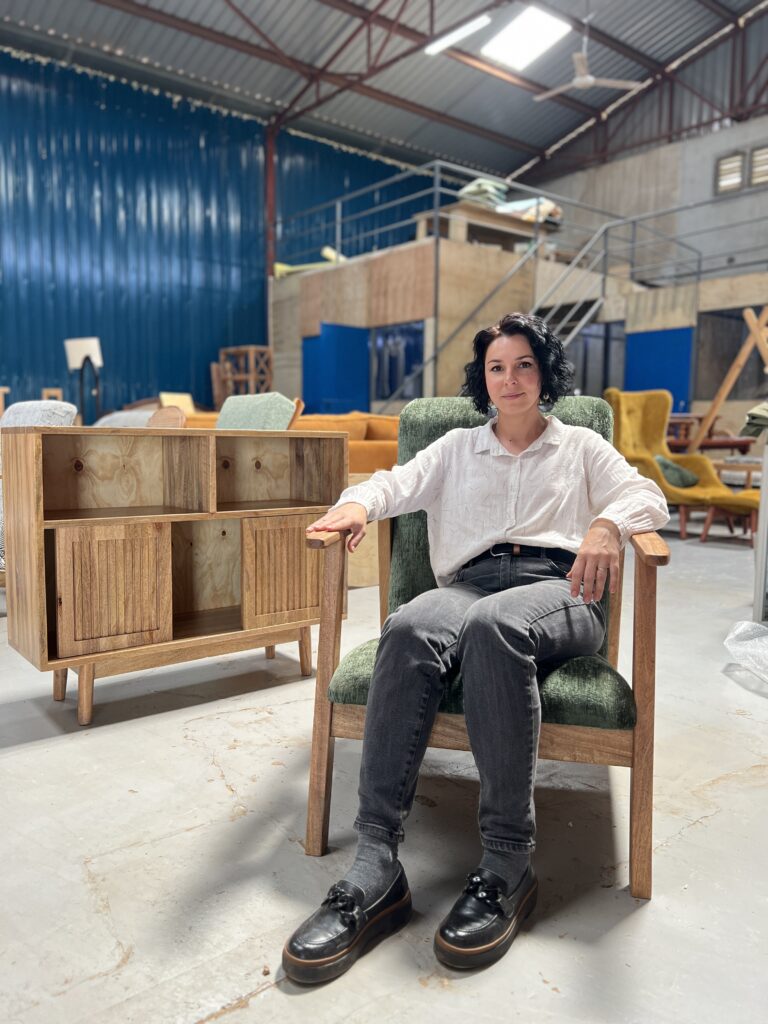
“Our pieces have been very well-received online, which is where we do most of our sales as our workshop is too far for most people to visit in person. People are surprised that we make our furniture locally because they associate our level of quality with imports,” says Elena with pride.
Put down the Meru Oak and mahogany, give mango wood a chance
If Elena had to describe the furniture in three words, she’d say that it’s modern, comfortable, and sustainable.
“Sustainability is important because wood is not an infinite resource. For instance, we do not use Meru Oak as it’s an endangered species, preferring instead to go for pine and cypress for soft woods, and mango for hard woods,” she says.
The mango wood is harvested from mango trees that have finished producing fruit.
In the next few years, they hope to open Lion and Bear shops and showrooms across the country, and start exporting to other markets.
For anyone who would like to venture into furniture manufacturing, Elena advises flexibility and patience, warning that typically, you are bound to make losses before you begin to see a profit. She is however hopeful that more people will consider joining the sector and help to build a culture of appreciation for locally made products.
“People who manufacture things in this country, no matter how big or small, need to share their stories more. They are often undervalued, which is a collective loss for all of us. We need to appreciate the level of skill and expertise it takes to make anything,” she says.
Elena’s top tips for buying quality wooden furniture
- Ensure it works for your space in terms of size and style. Take your time.
- There is no right or wrong wood. People have an obsession with mahogany, for example, associating it with quality. But harvesting mahogany means harvesting forests, so use alternatives such as mango which is just as good.
- Do not follow trends. Go for classic pieces which will look good for years to come.
- Quality can be hard to discern if you aren’t an expert. But at least ensure that the furniture you buy has not been stored or displayed out in the open, as this shortens its life.
- Pay more attention to finishing. Don’t buy pieces whose joins obviously don’t align, or whose upholstery is messy. Also, matte varnish is easier to maintain and looks good for longer than gloss.