
Dr Kagonya Awori has always known that any home she lives in must reflect her Afro-modern style. After she bought her current apartment, the 40 year old computer scientist took her time furnishing it, ensuring the pieces she picked reflected her excellent taste and design sensitivities. The result is an urban sanctuary with African roots that she says she never wants to leave. She opens her doors to Niko Kwangu in this illuminating interview.
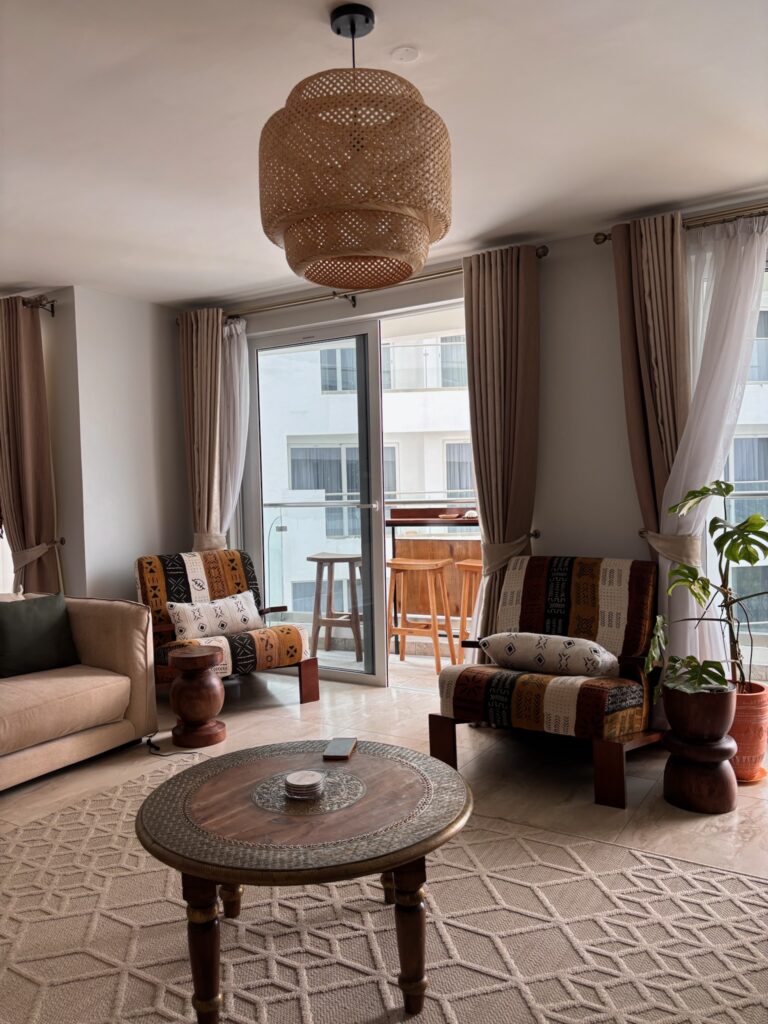
Dr Kagonya Awori’s home is a living, breathing love letter to Africa. Inside her living room, two signature chairs upholstered in Malian mudcloth immediately draw the eye, showing off their stunning symmetry in vivid browns, blacks and creams. You see that the mud cloth motif plays out in the rest of the space; it is in the patterns on her carpet, her choice of wall decor and the natural wood tones in her furniture.
“I am very Afro-centric. I love this continent. I wanted my home to feel like I am in my element and this shows in my choices of colour and patterns,” she says.
The result is a cohesive, creative and calm space that reflects that devotion and allows her personality to shine through.
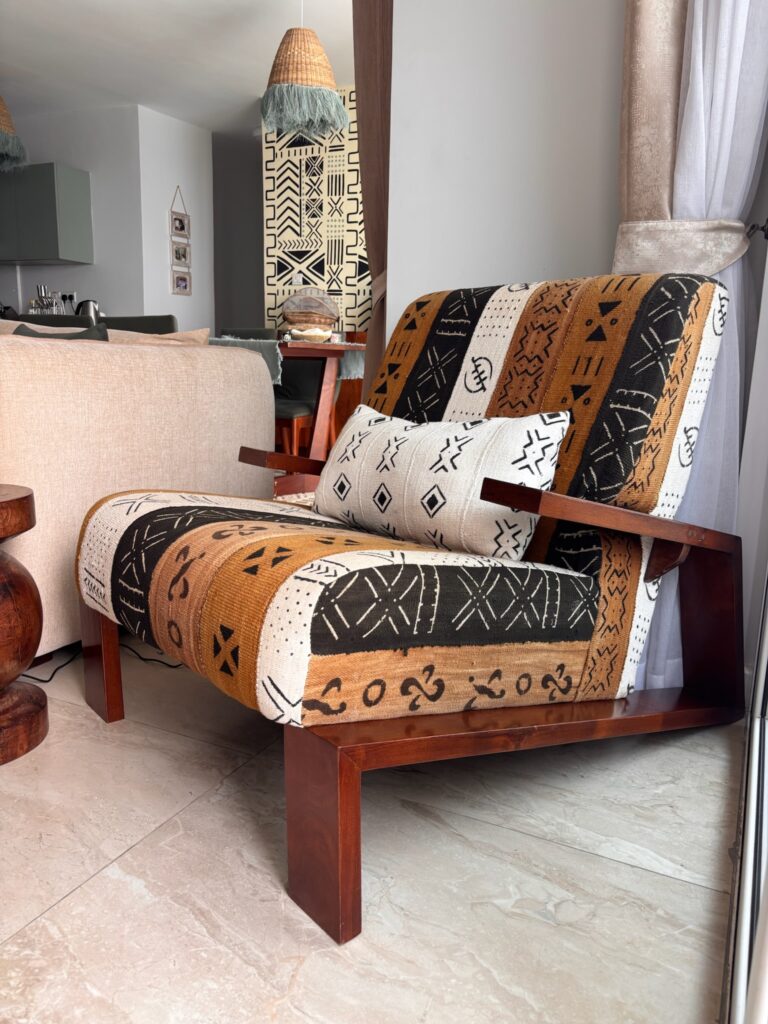
The long search for Malian mudcloth
The Malian mudcloth is an unusual choice, not as ubiquitous as the kitenge fabric, and certainly not in mainstream use as furniture upholstery. Kagonya had wanted it for years but found sourcing it complicated. The Nairobi shops that stocked it were ridiculously overpriced and importing from West Africa came with uncertain timelines and high taxes.
But her interior designer, Catherine Mukiibi of Etana Interiors, had a plan. “She talked to someone who talked to someone who talked to someone,” Kagonya laughs. “And somewhere in downtown Nairobi, we found the real thing.”
The mudcloth, handmade and thick with texture and dazzling with intricate patterns, carries history in every line. “When you touch it, you feel a story,” she says. This is why she chose it over mass‑produced wax prints. Authenticity matters.
Catherine’s inventiveness and attention to detail were the exact qualities that Kagonya was looking for in an interior designer. Although she knew exactly what she wanted for her house, Kagonya needed a creative partner who could share her vision and execute it.
Good things (and relationships) take time
Their process was slow, thoughtful, and meticulous. Catherine created 3D renders of every room and a shared design board, born from a rhythm of exchanging ideas and inspirations. Nearly every piece of furniture—chairs, cabinetry, lampshades—was custom‑made from photos that Kagonya shared.
“Her work ethic is exceptional,” she says. “She redoes things until they’re perfect. No excuses, no extra charges.”
She has recommended Catherine so widely that the designer is now booked for months.
A special shade of green
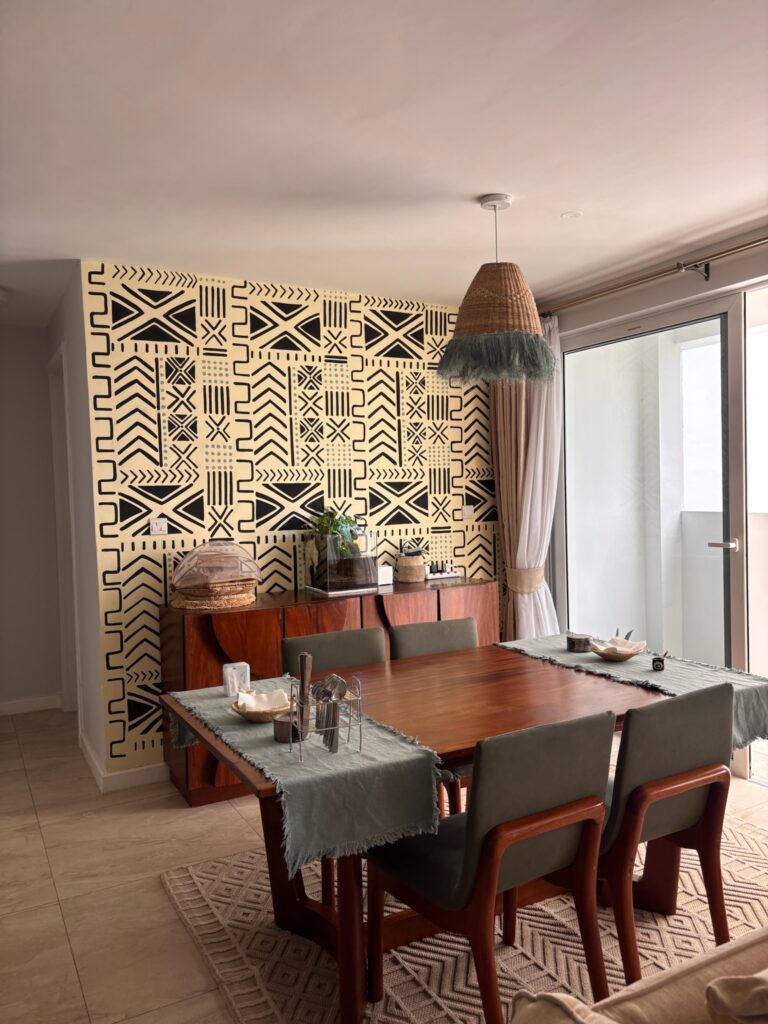
Amidst the dominant earth colours is an irrepressible streak of green that lends an unexpected modern note to what may have otherwise become a flat colour palette. It came with the house.
It captured her imagination from the moment she first walked into the then‑empty apartment in early 2024, an unexpected shade of celadon green on the built-in kitchen cabinetry. She found it soft and soothing, like water. “It held me captive,” she recalls.
The color became the anchor around which the rest of the home took shape. You see it echoed throughout: in lamps, cushions, the dining set, and even on the mural wall where the painter blended it subtly into the geometric design. “It makes me feel calm,” she says.
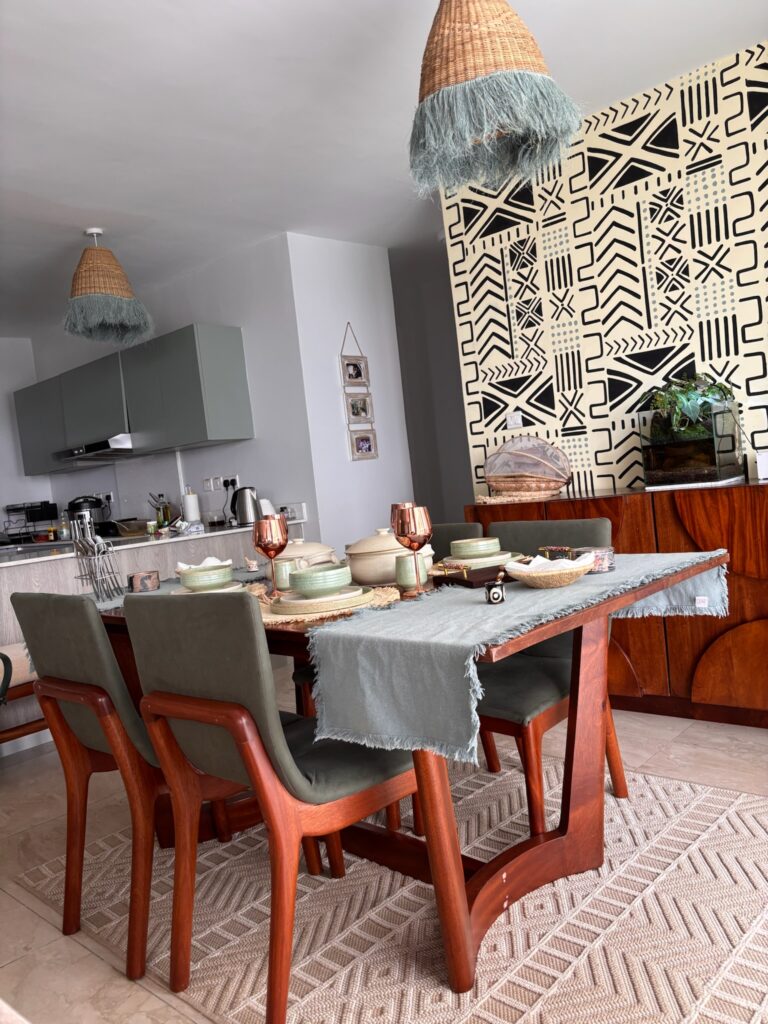
That balance between bold African prints and soothing modern tones is the heart of her design language.
Design is a transferable skill
Kagonya’s design confidence didn’t come by accident. She has a background in human‑computer interaction, which blends design, engineering, and psychology. Years of travel have exposed her to diverse interpretations of art and architecture, and sharpened her tastes. She appreciates beauty and believes in investing in the place you come to for rest, stillness, and authenticity.
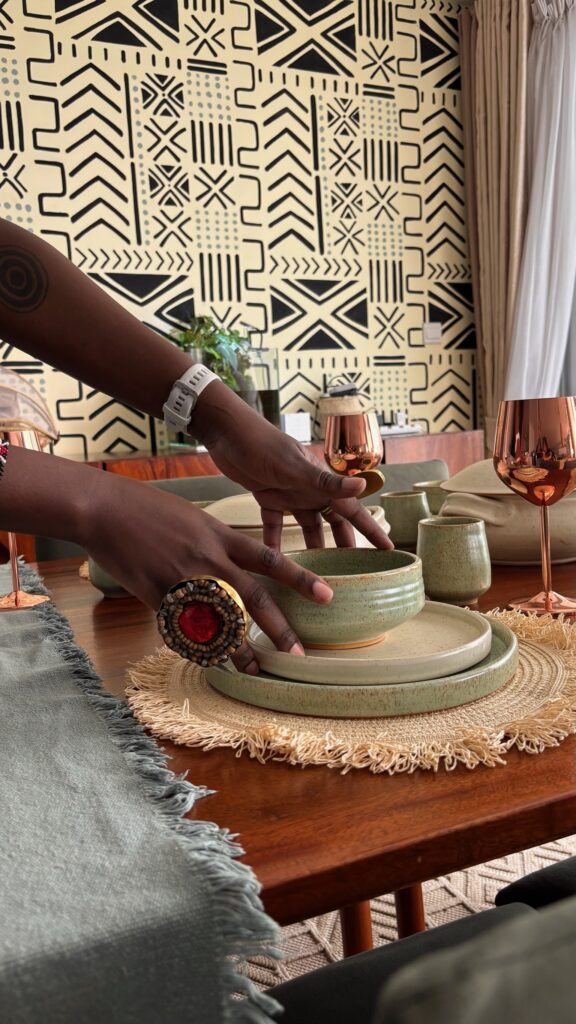
“Your home is a reflection of you,” she says. “Why not make it beautiful?”
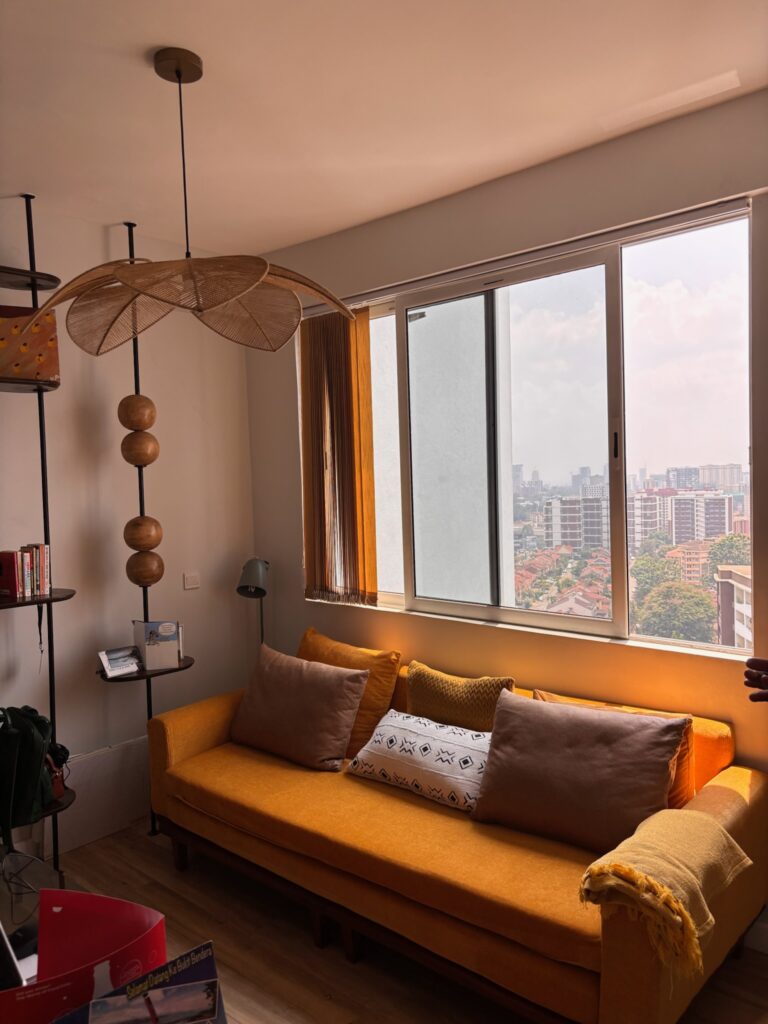
Since she owns her apartment, she has taken liberties when it comes to decorating it. In her office, for instance, she has an in-built bookshelf with metal rods anchoring it to the floor and ceiling, creating a bespoke piece that delivers in form and function.
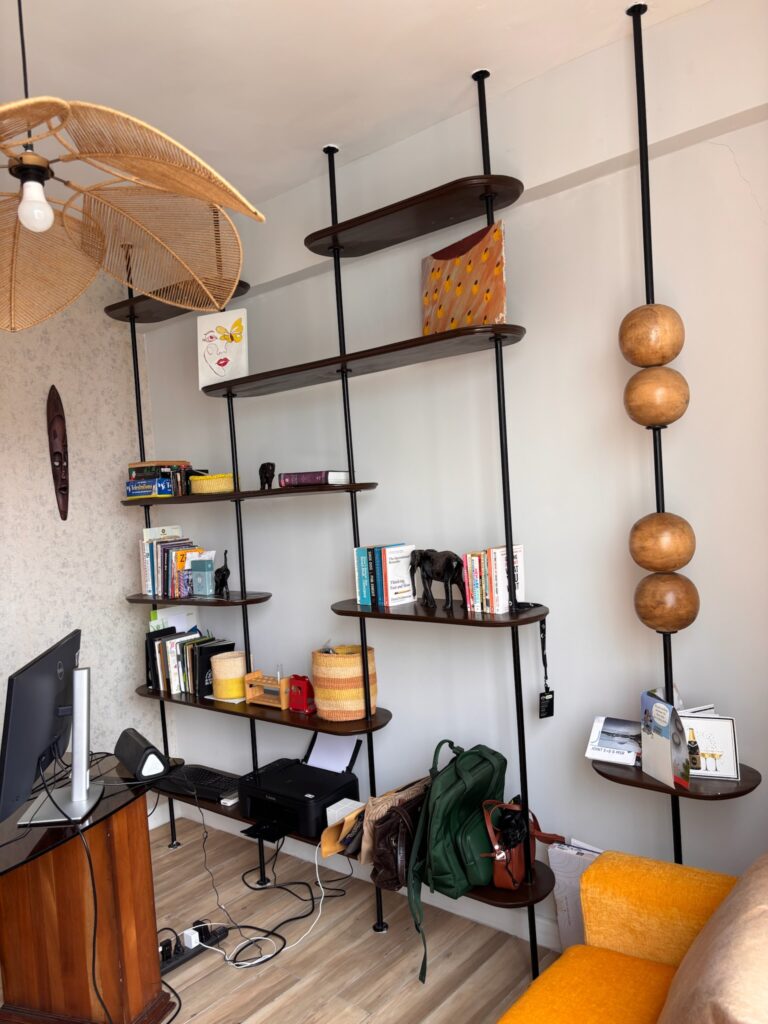
For her, home is not just a physical space but a vessel of emotion. She even prayed over it: that everyone who enters “feels the love of God” and leaves their burdens at the door.
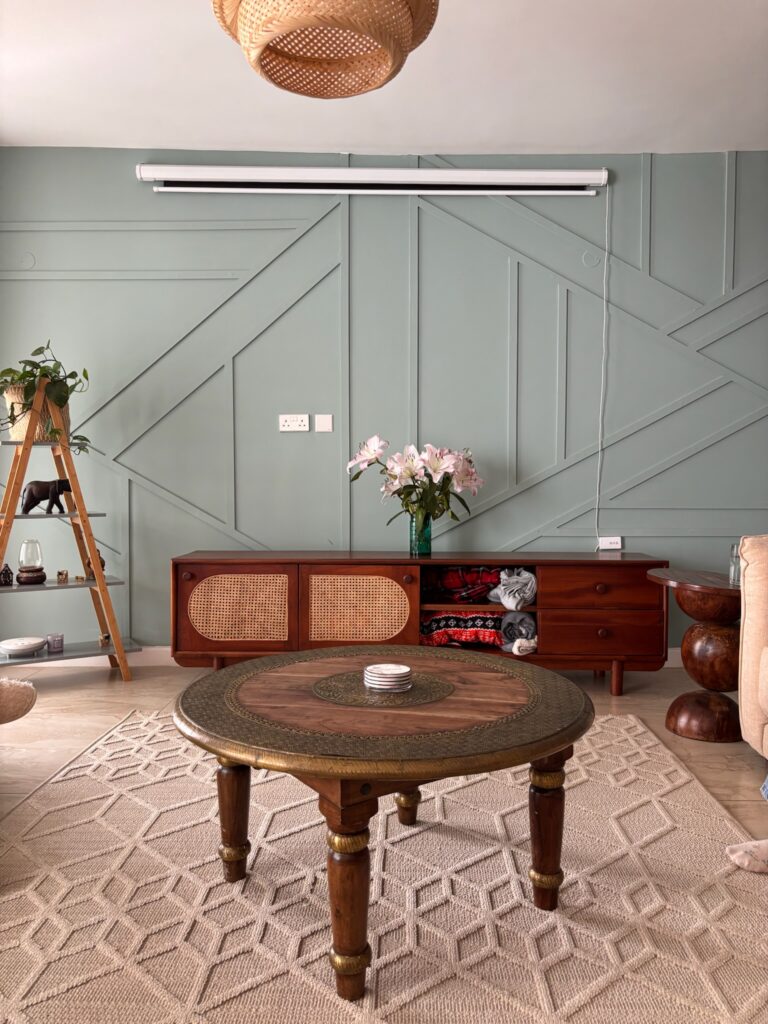
Kagonya spends most of her time in the open-plan kitchen—she loves to cook—or on the balcony where she enjoys the sun and sweeping views of Nairobi. She doesn’t own a TV. When she needs a cinematic moment, she lowers a projector screen that hides neatly away when not in use.
Letting elephants steal the show
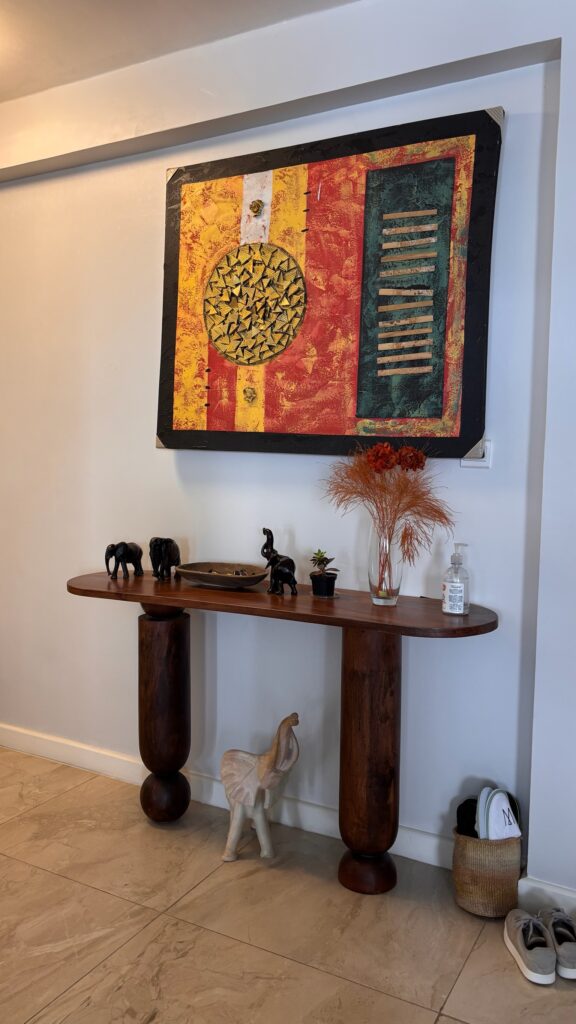
The most recent thing that she bought for her home? A wooden elephant sculpture for Kes 800. Elephants are scattered all over her home; some tiny, some carved from wood, others from soapstone, some gifted, one “accidentally” rehomed from her brother. She loves their memory, gentleness, and majesty.
“Big but caring,” she says. “Gentle but powerful. Organized. They remember the ones they love.”
This apartment may not be her forever home but she plans to return here for retirement, drawn by the convenience and amenities.
With its calm green, bold prints, and stories in every corner, her home will remain exactly as it is, perhaps rented out one day as a fully furnished space, but preserved like a time capsule of her taste.
“I love how it came together,” she says. “This home holds a part of me.”