
When she was in her 20s, Winnie would often day dream about the kind of home she’d live in when she was older. A home that would make her feel like a real grown up, that would indicate that she had her life together. Now in her 30s, she lets Niko Kwangu into the big girl apartment of her dreams.

The first thing you see when you walk into Winnie Chelagat’s house is a striking abstract painting done in hues of white, brown, black and beige. It looks like a desertscape, its undulating sand dunes stretching all the way to the horizon.
“This painting is exactly how I want my home to feel. Light, airy, and full of possibility. I like big open spaces, a sense that I have room to be myself,” she says.
The painting sets the tone for the rest of her house. The walls are stark white, against which the pops of colour in her couch and study area add texture and interest. She has chosen mixed materials for her furniture, going for heavy, white-washed wood supported by metal columns for her entry way console, glass and metal for her coffee table, and sturdy wooden legs for her sofas.
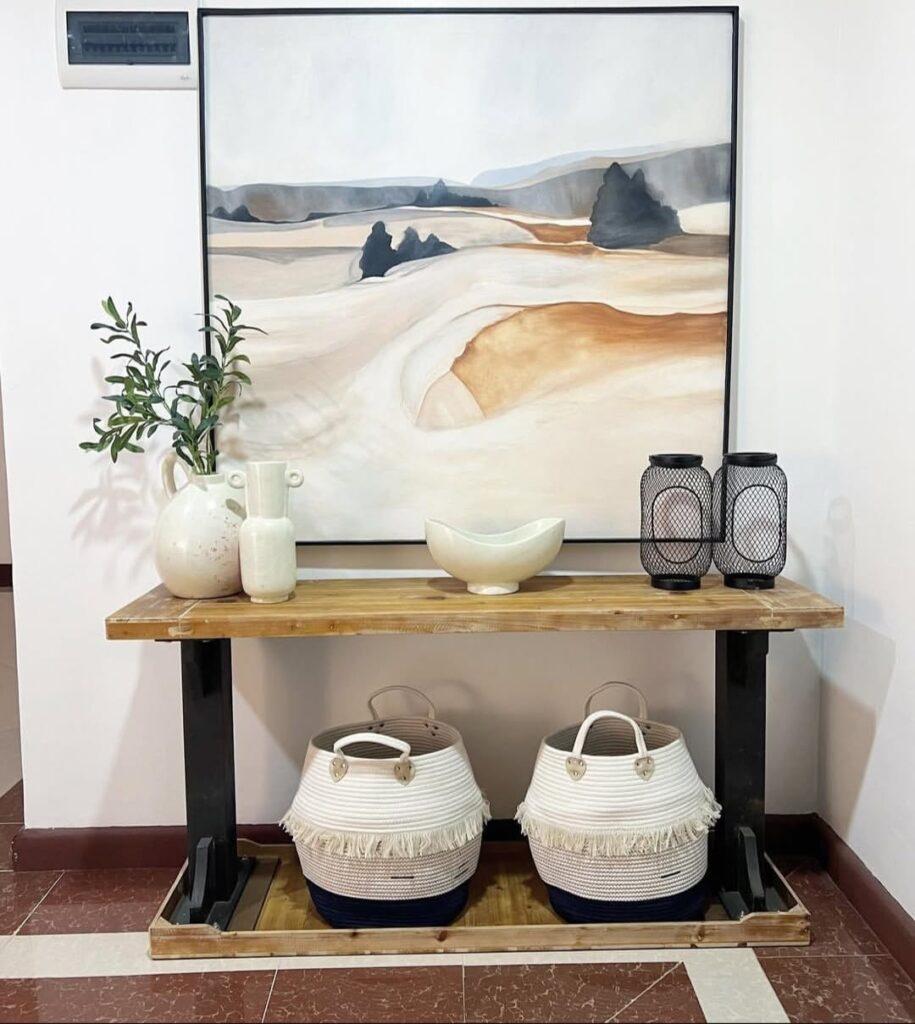
“My favourite is the entry way, because it’s the one part I was very specific about what I wanted. It represents my kind of style- a relaxed, coastal feel brought to life by that painting, the white-washed wood of the console, and the woven baskets, all against a white wall,” says the 35 year old co-founder of Mama CBO, a grassroots organisation working to reduce maternal and child mortality in Baringo County in Kenya.
A love affair with the ocean
Winnie is drawn to the ocean and hopes to one day make her home at the coast, but for now, she is happy to have replicated the feelings that the ocean evokes in her through thoughtful design and decor choices, right in the middle of the Nairobi concrete jungle.
“This yearning for the ocean is a core design principle for me. I prioritise openness and space, because I want to feel like air has space to move through the house, the way a cool breeze soothes you when you stand at a balcony facing the ocean,” she said.
This was not always her style. She shares that in her 20s, she once painted her walls pink in an attempt to experiment with colour. She found the effect too loud because everything clashed and created too much visual noise.
“Now I know that I like muted colours; browns, whites, blacks, and greys. My one concession to bright colours is green, which is why I have green sofas and a green feature wall at the study area,” says Winnie.
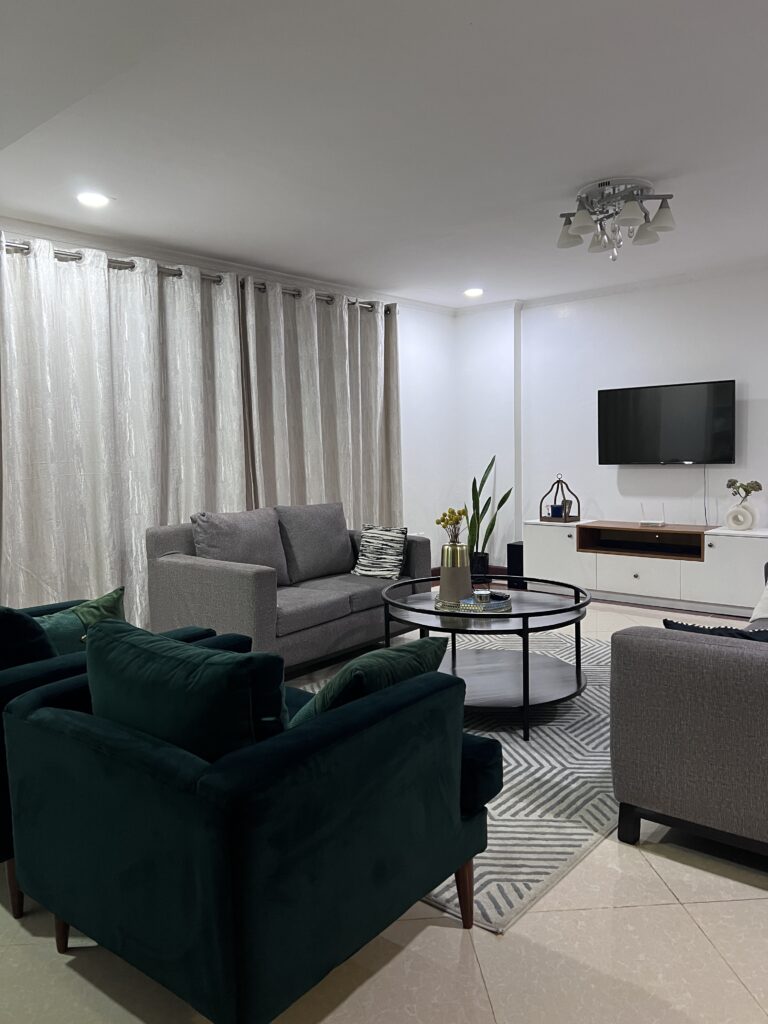
She describes herself as an aspiring minimalist. You could take a picture of her living room and place it in a magazine without needing to move anything out of the way. But that’s not to say that Winnie’s home lacks personality or character.
“I am thoughtful about what I bring into my home. I do not like clutter; every piece of furniture and knick knack has its place and serves a particular function. I like moving from space to space without feeling like I am navigating an obstacle course,” she says with a laugh.
Finding the right interior designer
This was the brief that she gave the interior designer she hired to bring her vision to life. She worked with Shiku Muchiri of Shiku Interiors, whom she found on Instagram, upon a friend’s recommendation. She had a vague idea of what she wanted different spaces in her home to look like but needed help putting it together and actualising it.
Working with Shiku was easy. She visited the house and put together a concept, consulting Winnie about her preferences when it came to colours, furniture, and decor. She then put together a comprehensive render of what the space would look like, providing a cohesive concept that they could work with.
“It was nice to have someone to bounce my ideas off of. She did a good job translating the images in my head into what you see in this space today. She was creative and attentive to details and I enjoyed working with her,” said Winnie.
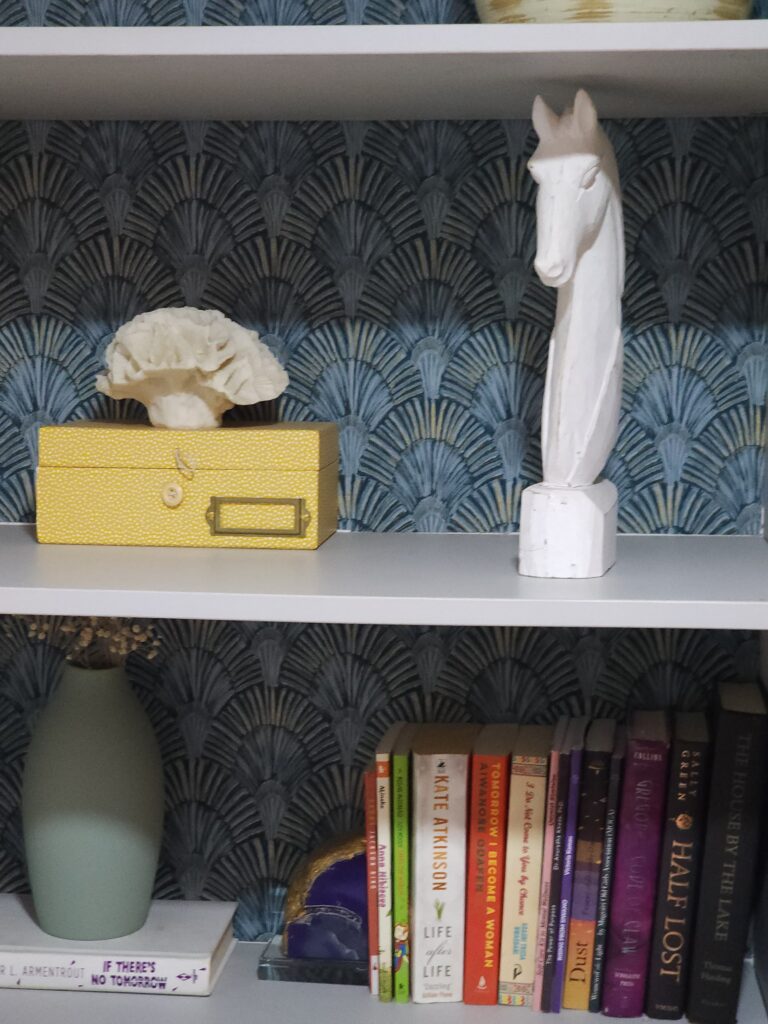
The result is a restrained and edited approach to decorating with minimal clutter. While the rest of the space has white walls, her study area is anchored by a bold green wallpaper with seashell patterns, creating an interesting visual contrast.
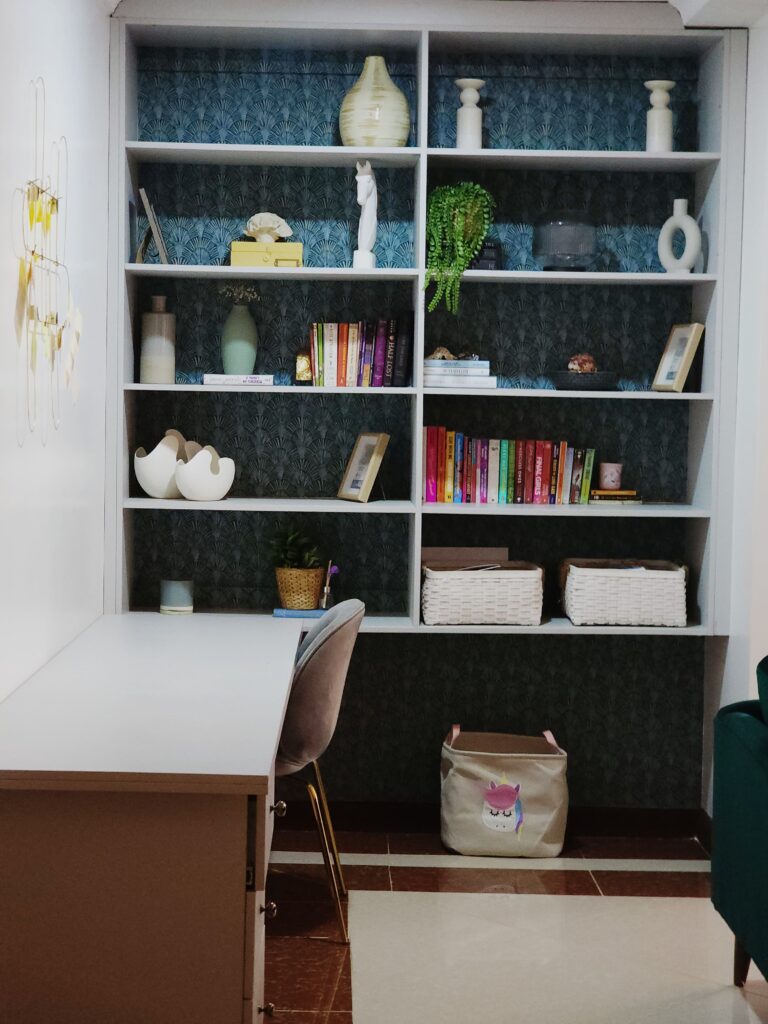
“Shiku definitely had to convince me to try that wallpaper and I only agreed after she said that if I did not like it we could take it out. I was skeptical at first but it grew on me and now I love it. I think it’s a nice pop of colour against all the white,” she says.
They created the study area out of blank walls, installing shelving and cabinetry to give it functionality and form. On the shelves are books, vases and sculptures, as well as woven catchalls for smaller items. While initially Winnie envisioned that the space would be her home office, it has been taken over by her seven year old daughter who does her homework and art projects there.
She wouldn’t call her home a finished project, noting that she still needs to work on her bedroom and the balcony. Still, she loves it and how well it fits her life. Her favourite part has been creating memories with her friends and family, including the latest addition, a rambunctious little kitten called Alex.
“When I was in my 20s and thinking about what my dream home would be like, this is what I envisioned. I am so grateful to have that dream come true,” says Winnie.
Winnie’s top tips for working with an interior designer
- Look at their aesthetic, go through their page/catalogue, and ensure you like their style. Because that style will show up in your home.
- Look at their reviews and get an opinion from someone who has worked with them
- Be mindful of budgets and clear about all costs. Understand how the designer charges for their services and agree on a budget that works for both of you. Interior decorating is expensive.
- Even if you only have money to do one room, ask for a render of the entire house so that you can see how it all comes together. You can then work on the other rooms slowly, at your own pace. This can take years.
- Be patient. Remember you’re not their only client. Good design takes time.
- Notify your landlord about the changes you want to make and ask permission for any structural ones.
Such a beautiful home. I’m glad she listened to the interior designer on the wallpaper. It gives the study area a unique character.
Great tips on how to choose and work with an interior designer.